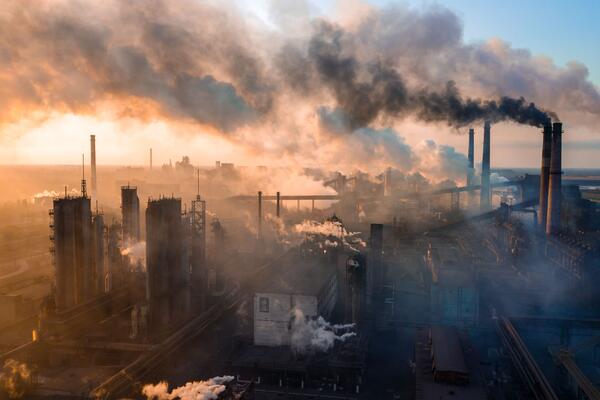
Activated carbon plays a crucial role in air filtration, especially when it comes to adsorbing harmful gases such as ozone, nitrogen dioxide, sulfur dioxide and volatile organic compounds (VOCs).
Activated carbon plays a decisive role in air filtration, particularly in adsorbing harmful gases such as ozone, nitrogen dioxide, sulphur dioxide and volatile organic compounds (VOCs).
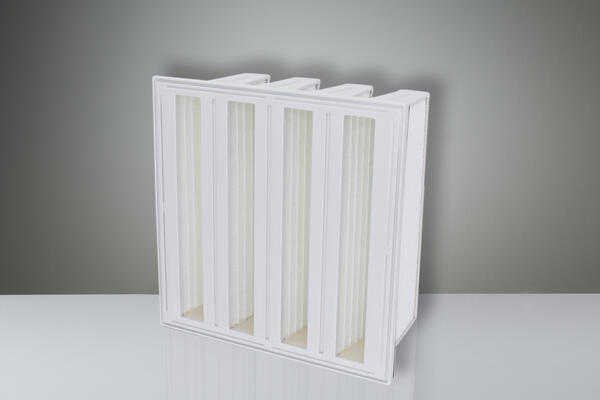
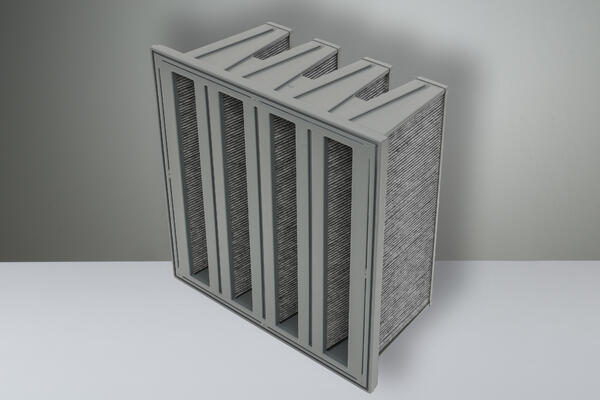
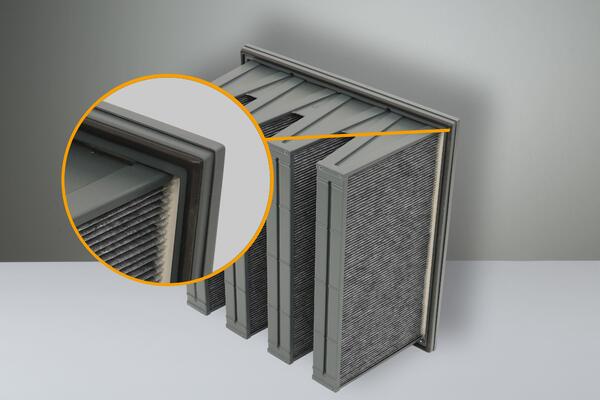
EMW® activatedcarbon compact filters are the ideal solution for efficient adsorption of harmful substances. The activated carbon compact filters are used in ventilation and air conditioning systems, in the chemical and pharmaceutical industries, in ventilation technology and for extraction at workplaces for the adsorption of gaseous substances.
Rely on the EMW® compact activated carbon filter, classified in accordance with ISO 10121-3, to effectively reduce harmful substances and sustainably improve air quality. For additional particle filtration, EMW® offers activated carbon filters with a pre-filter medium in ISO ePM1 65% (formerly F7 according to EN 779) or ISO ePM10 75% (formerly M6) according to ISO 16890.

Click on the image to stop the animation and rotate it manually.
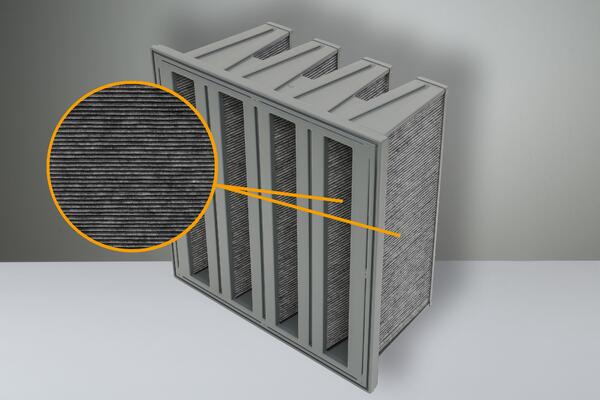
What are the key features of the filter media used in EMW® activated carbon compact filters?
Why aren’t conventional filters sufficient?
Harmful gases such as ozone, nitrogen dioxide, sulfur dioxide, and volatile organic compounds (VOCs) have molecular sizes in the nanometer range, whereas conventional air filters (such as (H)EPA filters) primarily capture particles in the micrometer range. Therefore, filtration using standard air filters is often insufficient to effectively remove these harmful gases.
How do compact activated carbon filters work?
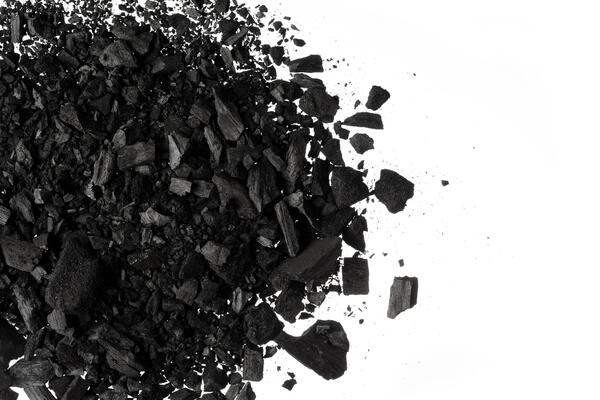
Activated carbon has an extremely large internal surface area. Harmful gases are bound through two mechanisms:
This combination enables the highly effective removal of even the smallest gaseous pollutants.
EMW® activated carbon filters are capable of adsorbing a wide range of harmful gases. They thus offer a comprehensive solution for air purification.
If you would like to learn more about the benefits of our activated carbon filters or have a specific inquiry, please feel free to contact our team.
Plastic frame: Robust and durable plastic frame that provides stability and reliability in demanding environments and is also immune to corrosion.
Fully incinerable: The filters are fully incinerable, allowing for easy and environmentally friendly disposal.
Endless seal: The endless seal ensures optimal sealing after installation and prevents unfiltered air from escaping.
| Filter type | MPK 4-20 AKP |
|---|---|
| Dimensions | 592 x 592 x 296 mm |
| Nominal air flow rate [m³/h] | 3400 |
| Initial pressure drop | 70 |
| Ozone (O3) | MD 60 |
| Sulphur dioxide (SO2) | vLD 35 |
| Nitrogen dioxide (NO2) | LD 65 |
| Toluene (C7H8) | MD 65 |
*Toluene is used a a reference gas for VOC (Volatile Organic Compounds)
| Filter type | MPK-4-AKP/M6 | MPK-4-AKP/F7 |
|---|---|---|
| Designated Filter Group ISO 16890 | ISO ePM 10 75% | ISO ePM 1 65% |
| Filter class according to EN 779 | M6 | F7 |
| Dimensions | 592 x 592 x 296 mm | 592 x 592 x 296 mm |
| Nominal air flow rate [m³/h] | 3400 | 3400 |
| Initial pressure drop | 75 | 175 |
| Ozone (O3) | MD 60 | MD 60 |
| Sulphur dioxide (SO2) | vLD 35 | vLD 35 |
| Nitrogen dioxide (NO2) | LD 65 | LD 65 |
| Toluene (C7H8) | MD 65 | MD 65 |
*Toluene is used a a reference gas for VOC (Volatile Organic Compounds)
The risks posed by air pollution are now recognised as the greatest threat to human health1. Harmful gases are also increasingly coming into focus.
Almost in the same breath, there are innovations to report regarding the ISO 10121 test standard for activated carbon air filters! Part 3 of the series of standards has been active since 2022. The third part establishes a new classification system for activated carbon air filters with the filter classes Light Duty (LD), Medium Duty (MD) and Heavy Duty (HD). You can find more information here.
1cf. World Health Organisation (2021a): WHO global air quality guidelines - particulate matter (PM2.5 and PM10), ozone, nitrogen dioxide, sulphur dioxide and carbon monoxide.
Ozone, NO₂, SO₂, VOCs such as toluene, as well as many other gaseous substances.
Depending on the pollutant load and the achieved filter class Light Duty (LD), Medium Duty (MD) or Heavy Duty (HD) according to ISO 10121-3, the service life may vary.
Physisorption = adhesion of molecules
Chemisorption = chemical bonding
The combination of both processes enables very high adsorption performance.
LD for low,
MD for medium,
HD for high pollutant concentrations.