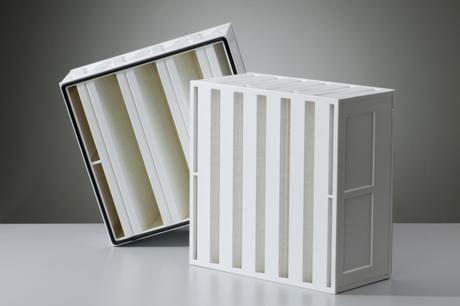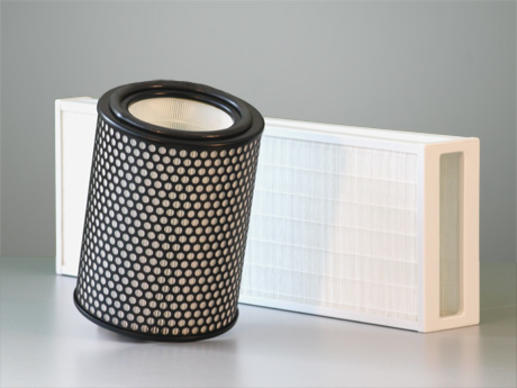

ISO 16890 classifies air filters for HVAC applications based on their effectiveness against fine particulate matter. The standard, valid since late 2016, fully replaced the former European standard EN 779 in 2018.
Unlike EN 779, which focused on a single particle size (e.g., 0.4 µm), ISO 16890 evaluates real particulate fractions:
PM1
PM2.5
PM10
This approach enables a realistic assessment of filtration performance. Based on ISO 16890, indoor air quality can be planned in a targeted and normative manner – for both non-residential buildings (e.g., EN 16798-3) and residential buildings. Air pollution is among the world’s leading health risks.¹ The latest WHO guidelines (2021) therefore recommend significantly stricter limit values for outdoor and indoor air quality.²
Based on this framework, outdoor air can be categorized into three classes.
¹ Cf. WHO (2021b), p. XIV.
² Cf. WHO (2021a), p. 8.
For percise planning, outdoor air quality can be divided into three so-called ODA categories (Outdoor Air). These categories are based on the WHO’s 2021 recommendations for fine dust limit values.³
Category Outdoor Air |
PM2,5 (µg / m³) Annual Average |
PM10 (µg / m³) Annual Average |
Description |
ODA 1 |
≤ 5 |
≤ 15 |
Clean outdoor air – WHO limits are me |
ODA 2 |
≤ 7,5 |
≤ 22,5 |
Polluted outdoor air – WHO limits exceeded up to 1.5 times |
ODA 3 |
> 7,5 |
> 22,5 |
Heavily polluted outdoor air – WHO limits are significantly exceeded |
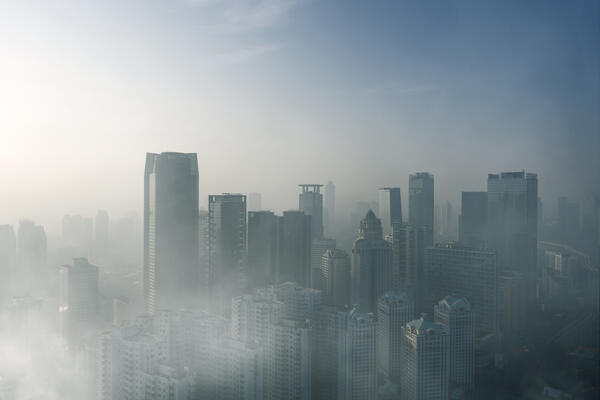
Without proper air filtration, indoor spaces often experience pollution levels comparable to those outdoors. The so-called supply air (SUP) categories provide useful guidance for selecting a suitable air filter according to ISO 16890. They define the recommended filter performance based on the quality of the outdoor air, i.e., the corresponding ODA category.
³ Cf. WHO (2021a), p. 5.
SUP categories (Supply Air) describe the required supply air quality in indoor environments. Analogous to ODA, they are based on WHO limit values for particulate matter and categorized into five levels. These categories enable deriving suitable filter performance according to ISO 16890, based on:
Outdoor air quality (ODA)
Target indoor air quality (SUP)
Category Indoor Air |
PM2,5 (µg / m³) Annual Average |
PM10 (µg / m³) Annual Average |
Examples |
SUP 1 |
≤ 1,25 |
≤ 3,75 |
Cleanrooms, hospitals, pharmaceutical industry |
SUP 2 |
≤ 2,5 |
≤ 7,5 |
Offices, hotels, kindergartens, residential buildings, food industry |
SUP 3 |
≤ 3,75 |
≤ 11,25 |
Data centers, shopping centers |
SUP 4 |
≤ 5 |
≤ 15 |
Stairwells, production facilities |
SUP 5 |
≤ 7,5 |
≤ 22,5 |
Underground garages, welding operations |
The appropriate filter class according to ISO ISO 16890 results from:
Using the respective ODA and SUP categories, the required minimum filtration efficiencies (ePMₓ) according to ISO 16890 can be determined.⁴
These recommendations apply to:
Single-stage filtration systems
Multi-stage filtration systems
ODA 3 + SUP 1 → at least ePM1 ≥ 90%
ODA 2 + SUP 3 → ePM2,5 ≥ 70% is sufficient
Outdoor Air Quality |
Supply Air Quality |
||||
SUP 1 |
SUP 2 |
SUP 3 |
SUP 4 |
SUP 5 |
|
ODA 1 |
ePM1 70% (Activated Carbon Filter recommended) |
ePM1 50% |
ePM2,5 50% |
ePM10 50% |
ePM10 50% |
ODA 2 |
ePM1 80% (Activated Carbon Filter required) |
ePM1 70% (Activated Carbon Filter recommended) |
ePM2,5 70% |
ePM10 80% |
ePM10 50% |
ODA 3 |
ePM1 90% (Activated Carbon Filter required) |
ePM1 80% (Activated Carbon Filter required) |
ePM2,5 80% (Activated Carbon Filter recommended) |
ePM10 90% |
ePM10 80% |
Note: This matrix serves as a guideline. Actual recommendations may vary depending on building type, usage, regulatory standards (e.g., VDI 6022, DIN EN 16798-3), or regional regulations.
⁴ Cf. VDMA Air Filter Information (2018), p. 7.
Despite major advances, most countries – including Germany – still exceed recommended WHO limits.⁵ ISO 16890 provides a practical basis for selecting suitable filters based on real particulate exposure.
By combining:
ODA Categories, and
SUP Categories,
a clear and transparent framework emerges for designing healthy indoor environments.
⁵ Cf. IQAir (2024)
Healthy indoor air demonstrably reduces the risk of:
Respiratory diseases such as asthma and COPD
Cardiovascular diseases
Inflammatory reactions in the respiratory tract
Increased particulate load in the bloodstream
Proper filter selection also protects:
Ventilation systems from premature wear
Heat exchangers from fouling
Building services from particle-induced malfunction
Healthy indoor air has been proven to reduce the risk of respiratory diseases such as asthma, COPD, and cardiovascular conditions. Choosing the right filter not only protects health but also helps prevent premature wear and tear on conditioning systems.
The new EU Directive 2024/2881 aims to significantly improve air quality in Europe, aligning limit values more closely with WHO recommendations – especially regarding PM₂.₅.⁶
Although focused on outdoor air, it emphasizes the need to protect indoor environments from polluted outdoor air.
⁶ Cf. European Parliament and Council Directive (2024), pp. 1–70.
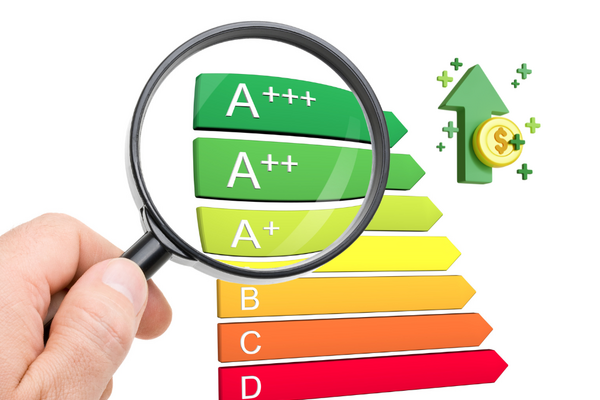
A high-performance filter must not only offer high particle removal efficiency. Equally important is energy demand:
Lower pressure drop reduces electricity consumption
Reduced pressure drop lowers operational costs across the lifecycle
Air quality and efficiency can be optimized simultaneously
Balanced filtration performance supports sustainable indoor air quality – both economically and ecologically
ISO 16890 provides a practical, scientifically grounded basis for selecting suitable air filters for diverse applications.
It helps to:
Reduce health risks
Protect HVAC systems
Optimize energy consumption
Promote sustainability
Ensure international comparability
Today, ISO 16890 is the leading global standard for air filter selection in HVAC applications.
ISO 16890 is the international standard for classifying HVAC filters based on their efficiency against PM1, PM2.5, and PM10.
EN 779 used a single particle size for testing, whereas ISO 16890 uses real PM fractions (PM1, PM2.5, PM10), reflecting actual air pollution more accurately.
They are particle size fractions: PM1 ≤ 1 µm, PM2.5 ≤ 2.5 µm, PM10 ≤ 10 µm. PM1 poses the greatest health risk because it can penetrate deeply into organs and the bloodstream.
ODA categories classify outdoor air quality based on WHO limits. Higher ODA means higher pollution levels and therefore higher minimum filter performance requirements.
SUP categories define the target indoor air quality. SUP 1 stands for highly critical environments with very high purity demands.
The combination of ODA (outdoor air quality) and SUP (required indoor air quality) defines the minimum ePM performance, e.g. ODA 3 with SUP 1 requires at least ePM1 ≥ 90%.
PM2.5 is among the greatest global health risks. ISO 16890 enables risk-based filter selection by linking filter performance directly to harmful PM fractions in the air.
The directive introduces stricter particulate limits in outdoor air, which increases the demand for high-performance filtration solutions for buildings and HVAC systems.
Pressure drop is crucial: it determines fan energy demand, filter lifetime, operating costs, and overall system efficiency.
Typically SUP 2 is used for homes, offices, and schools. The required ePM1 performance depends on the local ODA level at the building location.
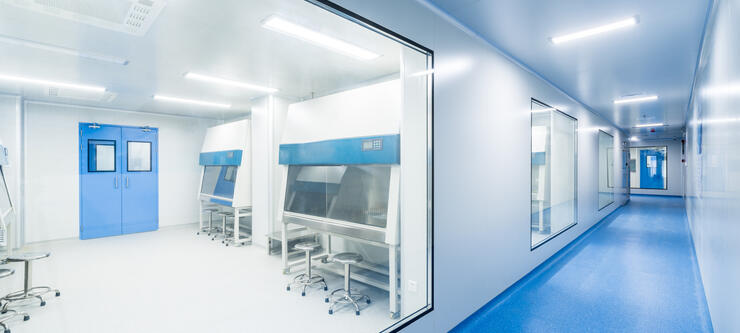
High-purity environments typically correspond to SUP 1 and require high-efficiency ePM1 filters, usually combined with activated carbon stages for gas-phase pollutants.
The higher the ODA category, the higher the required ePM1 performance; the higher the SUP category, the higher the required indoor air purity.
IQAir (2024): World Air Quality Report
European Parliament and Council Directive (2024): Air Quality and Clean Air for Europe, 2024/2881, pp. 1–70.
Prof. Dr. med. Barbara Hoffmann MPH (2025): Luftverschmutzung – wie niedrig ist niedrig genug? Was die neue EU-LQR für die Gesundheit bedeutet, Heinrich Heine-Universität Düsseldorf
VDMA Air Filter Information (2018): DIN EN ISO 16890:2017 – A Step Toward More Practical Relevance, pp. 1–12.
World Health Organization (2021a): WHO Global Air Quality Guidelines – Particulate Matter (PM2.5 and PM10), Ozone, Nitrogen Dioxide, Sulfur Dioxide, and Carbon Monoxide – Summary, pp. 1–10.
World Health Organization (2021b): WHO Global Air Quality Guidelines – Particulate Matter (PM2.5 and PM10), Ozone, Nitrogen Dioxide, Sulfur Dioxide, and Carbon Monoxide, pp. 1–273.